As I continue to spend my mornings studying for NCLEX, I have started to spend my evenings working in a nursing support position at a healthcare facility. My shifts are eight hours long, so in order to reach full time hours I work almost every day of the week. Studying and working every day, each week can lead to exhaustion, frustration and a sense of hoplessness with your never ending schedule. This is why taking time for yourself is important so you do not get burnt out.
As a student nurse, taking time for yourself is very important because getting burnt out can have lasting effects. You could start slacking in school due to a loss of motivation, missing information from fatigue, and perhaps even need to repeat a course because you didn't put in the effort that you specifically needed to for that material. Spending your non-test weekends out with friends, catching up on Netflix or reading a text book other than nursing is important to recharge your brain.
Don't worry, you won't fail your OB/Peds class if you take one night off of studying!
As a nursing professional it is even more important to take time for yourself so you are not fatigued and end up making simple mistakes with patient care. Frustration from home or exhaustion can seep into your bedside manner, causing you to lose sight of how you truly are as a nurse. Competence, respect and patience are key items for any nurse to bring to their patient care routine, and if you feel stuck at work all the time, you will quickly lose sight of those items.
Working 24/7 also provides you a greater chance of you bringing work home with you - which is something that is also not proper. You might find yourself getting frustrated at simple things, being crabby towards your friends and family, or shutting yourself off from the world all the time after work. None of those characteristics are healthy, and require re-evaluation of your current lifestyle!
Personally, I turn to several things when I am looking to decompress and take time for myself. When I can, I always jump at the chance to hang out with my friends. Having a night out laughing is always a great way to recharge and wake up to your professional responsibilities the next day.
However, if they're all working or busy I never deny my bed! Taking naps or catching up on my favorite TV shows (any Real Housewives series, Catfish, Friends and Sex in the City).
Working out and lifting weights is something that I also love to do. Aside from the natural release of endorphins, working towards a stronger body and being more confident in my own skin naturally makes me more motivated for life. I always have this dream of myself being this toned, bad-ass nurse - and spending an hour or so at the gym just brings me one step closer to being so!
Finding a creative hobby, one that you have to self-learn or go to a class to complete, might be a great idea as a way to de-stress. Focusing on the task (like focusing on reps or form when working out) will allow you to not focus on the stresses of day-to-day work life. Also, you are bound to expand your friend circle with like-minded crafters or hobby-enthusiests!
One particular hobby that I am extremely curious to learn now is crocheting! I think it would be so cool to learn how to crochet items such as scarves, hate, or decorative mats!
I hope that this blog post lit a fire under your butt to re-evaluate your extremely busy schedule and take a moment for yourself. Whether it be a half hour walk in nice weather, an hour gym session, or an evening with your best friends that limits work conversations - take the time to reward yourself for all of the hard work you are doing. Getting into the habit of implementing these things into your routine sooner rather than later will only set you up for long-term success in the healthcare industry. Being a healthcare professional (future or current) can take a lot out of one single person, so it is always important to refresh your mind, body, and spirit.
Thank you so much for reading! I hope you have a fabulous rest of your week!
- Michelle
#BSNbabe
I am an amazon affiliate, so some links are affiliate links through Amazon.
Showing posts with label clinical. Show all posts
Showing posts with label clinical. Show all posts
Monday, January 22, 2018

Monday, December 4, 2017
128 Hours Later
I have officially completed Eleven full twelve hour shifts (aka a little over 128 hours of clinical), gradually taking on the role of a Registered Nurse for my last official round of clinical in my nursing school career. This experience has taught me so many lessons that I will bring forth once I start practicing as a new-graduate nurse this winter. So, in this post I wanted to outline 64 things (Half of 128) that I have learned, experienced, or realized during my 128 clinical hours.
1. Meal prepping is so important as a nurse. The last thing that you want to do after a twelve hour shift is do any cooking. Take your one or two days off to go grocery shopping and prepare all of your meals for the entire next week.
2. Sleep is equally as important as eating properly. Throughout the entire CRT process I kept thinking, "The days where I can just work and sleep and not have to worry about studying are going to be absolutely amazing".
3. Try every new experience because you never know when you'll have to do that task again later in your career.
4. Make jokes and keep a soft heart.
5. Journaling is a great idea as a new graduate. During this CRT process we had to keep a brief journal of what happened each shift, so being able to look back years from now on your first year of independent nursing as a RN is going to be so valuable.
6. If there's any empty chair, take it. You stand for most of the day anyway.
7. Know your pharmacology because everyone is going to ask you to repeat their 8am, 3pm and 6pm medications at least 3 times after they're already placed in their medication cup.
8. Memorize where supplies are placed, and do not hesitate to ask.
9. Always ask questions if you are unsure.
10. Breathe. Take deep breaths. It looks like a bad assignment on paper but with the help of your friends you can get through the day.
11. Value appreciative doctors, on the surface they are far and few between.
12. Try not to talk poorly about your co-workers. You would not want someone talking poorly of you behind your back, and you do not know the background information. Everyone is trying their best.
13. As a new graduate nurse - take EXTREME value in preceptorship during orientation and try to become as indepent as soon as possible because as soon as your are finished you are out to the wolves.
14. Night shift trumps day shift in coolness points.
15. DRINK YOUR WATER - IT'S IMPORTANT
16. Compression socks are a gift from God.
17. Shower as soon as you get home, exfoliate, and put your scrubs in a different hamper for cleanliness sake.
18. Always try to be kind.
19. Listen to your patients when they are venting. Yes, you are running your list of 20 things to do while they are fumbling over a story about their grandchild, but it matters to them and improves your relationship.
20. Relationships between nurses and patients for those 12 hours (if you don't go back to them the next day) are very important. Cherish the nice ones and appease the grumpy ones.
21. Don't count how many hours you have left in your shift, it'll probably disappoint you mid-way through.
22. CHERISH your CNA's. Depending on the unit, they are amazing at what they do and are extremely helpful.
23. Respect privacy.
24. Keep rude comments to yourselves in front of patients. You never know how someone might be feeling.
25. Wash your hands religiously and always use the foaming hand antiseptic by the doorway.
26. Gloves, gloves, gloves. For everything.
27. Napping and shopping during your days off are great therapy tools after working multiple days in a row.
28. Do not be that person that takes forever to give report.
29. Do not be that person that skoots out of report without being adequate or finishing all of your tasks correctly.
30. Sometimes you will have to stay hours late charting.
31. As a new graduate nurse, listen to your preceptor. They will probably get annoyed if they see your neglecting things they have stressed multiple times.
32. Practice your assessments - those are key to perfect nursing work. Changes can happen in an instant so you want realiable baselines.
33. Never call a doctor before you know exactly what you are going to say, or without any possible recommendations to the problem.
34. Nurses write more temporary orders that I ever realized previously.
35. Everybody poops.
36. Rules and plans are important - hospital policy for certain disease processes or protocols might seem silly, but they are there for a reason.
37. Always keep the patient's family in mind.
38. Always keep up on the information of your patient because everyone will be asking you questions and expect you to know everything under the sun about 1 out of 5 of your patients.
39. Sometimes your five minute lunch break is the only time you have to sit quietly, eat and recharge until you head back to the floor.
40. Patient report huddle with the case manager and the unit manager is super important in unit coherency, and smoothness.
41. Take your time at the Pixis station - putting something back or
grabbing something additional is a pain in the booty. Plus, it's
medication passing so safety should always come first.
42. Always go the extra mile. Your fellow employees and patients will thank you for it.
43. Take your water, snack and bathroom breaks when you can - you never know what'll happen 5 minutes later.
44. Patients are understanding towards you as long as you are understanding towards them.
45. Listening to your stethoscope and your nursing judgement are equally effective.
46. Be fair to your fellow students or co-workers
47. You might feel awkward now, but everyone starts off new at some point. So give it time, pave your way and the rest will fall into place.
48. Always double check something you are not sure of.
49. Read the medication packets in the Pixis bins because the pharmacists that put them in there are humans too and make mistakes. There are several rounds of quality control - do not take your round lightly.
50. Never underestimate the comfort level that comes from clean sheets and clean skin. Bed baths and sheet changes can make a world of difference in someone.
51. Your patients respect and appreciate your backstory - most of them love to know more about the person that they are seeing for 12 hours a day taking care of them.
52. Become a pro at writing everything down. Times, dates, procedures, ect. It's all relevant.
53. Take the time to find your own routine and groove. This is something that you'll be mastering for 30+ years so it is best to find the perfect situation for you.
54. If you are unhappy with a unit or specialty, go with your gut and find your passion. You did not spend 2 - 4 years of your life in school to be happy. However, leave gracefully and with respect to all involved.
55.The impressions you make now can very well follow you for the rest of your career. Nursing is actually a small knit community and you never know who knows who.
56. Post-it notes are my best friend when making temporary to-do lists during shifts or jotting down notes that I do not want to forget.
57. Keeping a highlighter and dry erase marker is always something that comes in handy.
58. Don't worry, you're going to get the hang of it. Things take time, especially if it is all completely foreign to you. Take deep breaths, breathe and believe in yourself.
59. You'll get used to the early mornings and late nights, and after a while you might start to enjoy them. You might really go the extra mile and miss them when you're finished.
60. Managers might be intimidating, but they can be your best friend - especially in times of need. Lean on your chain of command when need be. They might not know certain things unless they are informed.
61. Always practice good hand hygiene and wipe down your stethoscope with alcohol wipes.
62. Always remember why you started. Always remember your passion.
63.The days and nights where I no longer have to study for a nursing school exam, while working as well, are going to feel so amazing.
64. You're going to do just fine when you graduate. All it takes is time, patience, practice, perseverance, passion, and motivation.
Monday, October 16, 2017
Clinical: How to become less nervous and more confident
As nursing students one of the most nerve wracking events can be at the bed side performing a new skill. Doing something new that you've never done before can cause intense sweating, nervously shaky hands and a confidence drop. As a seasoned clinical nursing student, I am here to say that I certainly get nervous when doing new skills (or old skills that I have not done many of), and that it is perfectly normal to do so, but I have a few tricks up my sleeve to help you get past some of your nerves.
The first thing I always tell myself when faced with any learning opportunity is to just go for it. If you never try or do, you will never learn and experience. Experience is E-V-E-R-Y-T-H-I-N-G in clinical. You will not be able to see or do everything that you learn in class, so taking the opportunity to do what you can is the best option. I have certainly been terrified of the concept of doing invasive skills (i.e I turned down my first chance to start an IV because I was nervous) - but you will always have someone with you as a student (or new-grad during orientation), and you will always be re-directed if you start veering off the correct path. Don't worry, you are never alone in the healthcare field. Trust me, once the day is done and you are on your way home, you will regret not having done that new skill. Just take a deep breath, say "yes", and trust the one that is guiding you.
Another important thing to remember is that in two-or so years you will be the nurse. Do not take a back seat during clinical - this is your time to learn the skills that you will be required and expected to learn when you are an actual professional RN. There is no backseat driving when you are the real nurse.
But, back to your current student situation -
Practice the skills you will most likely see/are most scared of in your practice lab. In my experience, many students do not practice their skills in the lab unless it is right before skills demonstration. But, if you are feeling iffy about difficult skills like putting in an Indwelling Urinary Catheter, practice makes perfect. Going through the motions and practicing your sterile technique will ease that part of your nerves when it is time to glove up and perform the real deal.
Understand that you are not the only "new nursing student" and have not been "the only person nervously performing this skill". The nurse at the bedside watching and helping you was in your shoes years back when they were in school. We all start from the beginning, we are all learning, we are all trying. Do not let the experience and the credentials of the person standing beside you scare you into taking a back seat. Use them as the guide they are meant to be - your preceptor for that clinical day should show you unique opportunities and allow you to do things at the bedside when possible.
Overall, as a nursing student you need to remember that you are not expected to know everything. There is always going to be a learning curve at every new facility, new unit, and new specialty. Take each learning curve as new opportunities. Do not doubt yourself, do not find yourself overly confident to the point of haste, and take every clinical session day by day.
Nursing school is all about the journey and nerves are a natural large part of it - you just have to gain experience. Experience lends itself to eventual confidence. You can do this.
Thank you for reading this post, I hope that I was able to offer some advice towards one of the most natural and common feeling in nursing school.
- Michelle
#BSNbabe
The first thing I always tell myself when faced with any learning opportunity is to just go for it. If you never try or do, you will never learn and experience. Experience is E-V-E-R-Y-T-H-I-N-G in clinical. You will not be able to see or do everything that you learn in class, so taking the opportunity to do what you can is the best option. I have certainly been terrified of the concept of doing invasive skills (i.e I turned down my first chance to start an IV because I was nervous) - but you will always have someone with you as a student (or new-grad during orientation), and you will always be re-directed if you start veering off the correct path. Don't worry, you are never alone in the healthcare field. Trust me, once the day is done and you are on your way home, you will regret not having done that new skill. Just take a deep breath, say "yes", and trust the one that is guiding you.
Another important thing to remember is that in two-or so years you will be the nurse. Do not take a back seat during clinical - this is your time to learn the skills that you will be required and expected to learn when you are an actual professional RN. There is no backseat driving when you are the real nurse.
But, back to your current student situation -
Practice the skills you will most likely see/are most scared of in your practice lab. In my experience, many students do not practice their skills in the lab unless it is right before skills demonstration. But, if you are feeling iffy about difficult skills like putting in an Indwelling Urinary Catheter, practice makes perfect. Going through the motions and practicing your sterile technique will ease that part of your nerves when it is time to glove up and perform the real deal.
Understand that you are not the only "new nursing student" and have not been "the only person nervously performing this skill". The nurse at the bedside watching and helping you was in your shoes years back when they were in school. We all start from the beginning, we are all learning, we are all trying. Do not let the experience and the credentials of the person standing beside you scare you into taking a back seat. Use them as the guide they are meant to be - your preceptor for that clinical day should show you unique opportunities and allow you to do things at the bedside when possible.
Overall, as a nursing student you need to remember that you are not expected to know everything. There is always going to be a learning curve at every new facility, new unit, and new specialty. Take each learning curve as new opportunities. Do not doubt yourself, do not find yourself overly confident to the point of haste, and take every clinical session day by day.
Nursing school is all about the journey and nerves are a natural large part of it - you just have to gain experience. Experience lends itself to eventual confidence. You can do this.
Thank you for reading this post, I hope that I was able to offer some advice towards one of the most natural and common feeling in nursing school.
- Michelle
#BSNbabe
Friday, September 1, 2017
My Clinical Skin Care Routine
As you all know nursing school is extremely stressful - and as some of you might have experienced already, stress can cause break outs.
I have always been regarded as having clear skin. I was never the teenager with a face full of acne, and for that I am grateful. Of course I would occasionally have random breakouts - but for the most part I had a clear face. However, the farther I moved through nursing school the more breakouts I was getting all over my face from being stressed and not truly taking proper care of my skin.
I mean, when it's past midnight and I finally decided to stop studying and go to sleep the last thing I wanted to do was go wash my face.
Now that I am a little older I certainly regard skin care products above makeup, and I figured that since I updated my readers on what cosmetics I use for clinical days that I would share my current skin care routine.
Face Wash:
I have always been one who enjoys an evening shower as opposed to one in the morning, so I make sure to use an exfoliating face wash in the shower to make sure to remove everything from the day from my pores. If I do not use an exfoliating face wash I am certainly prone to clogged pores and that is never fun.
For the most part I have always used the Biore Pore Unclogging Scrub:

I genuinely enjoy this scrub and I have made countless re-purchases of this face wash. I think that this product adequately cleans out my pores, does not leave a residue on my face afterwards, and the amount of the product in each package lasts a long time. It only takes a little dollop of product to spread around your whole face, and the "scrubbies" are noticeable without being too abrasive.
The Biore brand has several other type of face scrubs that I have not tried, but I would recommend the company overall.
However, when I went to the store the last time to restock they were conveniently out of my normal face wash. This caused me to pick up a different one: The St. Ive's Oatmeal Scrub.

I am honestly not the biggest fan of this face wash. It has a lot of "scrubbies" within the product and when I wash my face I feel as though my skin is getting clean, however, afterwards I notice a waxy feeling to my skin and see that my pores are not as clear as they would be with my usual product. Although the summer humidity and sweating might contribute to my most recent clogged pores, I am still not convinced that this product cleans them out as well as the Biore face scrub does.
Overall for skin care products I have found that the Simple line works best for my skin. I would not say that I have necessarily sensitive skin, but the Simple brand has certainly never irritated my skin and has kept it clear.
Toner:

The Simple toner has been another product that I have continually repurchased. I would not say that it is a miracle product or does anything out of the ordinary - but it does get the job done and I have been pleased with my results.
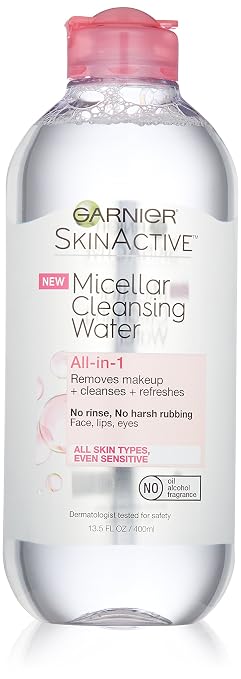
However, the toner that I am currently using is the Garnier Micellar Water
I purchased this product because at the time it was on sale and I wanted to shake up my routine a bit. The bottle is a very large bottle so I would say that you certainly get enough bang for your buck with this product. I wouldn't say this has changed my skin dramatically - currently I do have blemishes but I attribute those to my current St. Ive's face wash and the summer humidity.
Eye makeup remover:
A good eye makeup remover is something I have been searching for for a long time, simply for the detail of packaging. All of the makeup removers that I have tried that come with a twist off cap has leaked everywhere when laid on it's side. I would get so frustrated that I would have an oily mess all over my other products and knew it was time to hunt for the perfectly packaged liquid eye makeup remover.
I finally found one within the Simple skin care line.

This specific eye makeup remover is their new formula. I believe that their first formula of eye makeup remover was not well received so they released this new and improved product that does not irritate the eyes.
The product itself does a good job at removing all of my mascara, glittery eyeshadow and smudge proof eyeliner. The squeeze cap allows user control over how much really gets onto your cotton pad as opposed to other product designs where there is really no control at all.
I can't count how many times I spilled eye makeup remover all over my vanity because I over poured on my cotton pad when using other makeup removers. Not fun.

Moisturizer:
Of course I had to buy the Simple Skin Care moisturizer if I have the rest of their products, right?!?
My reasoning for this product is the same as the previous ones: it does the job correctly and it does not irritate my skin. I have very dry skin so having a facial moisturizer is very important to me.
My only general gripe I have about the product is you really have to rub it into your skin or it will leave a slight residue if is not totally absorbed into your pores.
I hope that this post has inspired you to look to your skin care items and think about using them more religiously. Now that I am getting older I am starting to think more about the quality of my skin. I may only be 22 now but before I know it I will be 52 and the choices that I make now will directly impact how I look later. I also think that having clear skin is important because sometimes a girl just doesn't want to wear makeup to a hospital shift, so having naturally clear skin will promote self-confidence and eliminate the feeling of needing to wear a full face of makeup.
I really need to work on drinking more water. Water is a great way to keep your body and skin hydrated, which is very important to staying healthy.
Thank you so much for reading! I really appreciate all of those who are following my blog!
- Michelle
#BSNbabe
I have always been regarded as having clear skin. I was never the teenager with a face full of acne, and for that I am grateful. Of course I would occasionally have random breakouts - but for the most part I had a clear face. However, the farther I moved through nursing school the more breakouts I was getting all over my face from being stressed and not truly taking proper care of my skin.
I mean, when it's past midnight and I finally decided to stop studying and go to sleep the last thing I wanted to do was go wash my face.
Now that I am a little older I certainly regard skin care products above makeup, and I figured that since I updated my readers on what cosmetics I use for clinical days that I would share my current skin care routine.
Face Wash:
I have always been one who enjoys an evening shower as opposed to one in the morning, so I make sure to use an exfoliating face wash in the shower to make sure to remove everything from the day from my pores. If I do not use an exfoliating face wash I am certainly prone to clogged pores and that is never fun.
For the most part I have always used the Biore Pore Unclogging Scrub:
I genuinely enjoy this scrub and I have made countless re-purchases of this face wash. I think that this product adequately cleans out my pores, does not leave a residue on my face afterwards, and the amount of the product in each package lasts a long time. It only takes a little dollop of product to spread around your whole face, and the "scrubbies" are noticeable without being too abrasive.
The Biore brand has several other type of face scrubs that I have not tried, but I would recommend the company overall.
However, when I went to the store the last time to restock they were conveniently out of my normal face wash. This caused me to pick up a different one: The St. Ive's Oatmeal Scrub.
I am honestly not the biggest fan of this face wash. It has a lot of "scrubbies" within the product and when I wash my face I feel as though my skin is getting clean, however, afterwards I notice a waxy feeling to my skin and see that my pores are not as clear as they would be with my usual product. Although the summer humidity and sweating might contribute to my most recent clogged pores, I am still not convinced that this product cleans them out as well as the Biore face scrub does.
Overall for skin care products I have found that the Simple line works best for my skin. I would not say that I have necessarily sensitive skin, but the Simple brand has certainly never irritated my skin and has kept it clear.
Toner:
The Simple toner has been another product that I have continually repurchased. I would not say that it is a miracle product or does anything out of the ordinary - but it does get the job done and I have been pleased with my results.
However, the toner that I am currently using is the Garnier Micellar Water
I purchased this product because at the time it was on sale and I wanted to shake up my routine a bit. The bottle is a very large bottle so I would say that you certainly get enough bang for your buck with this product. I wouldn't say this has changed my skin dramatically - currently I do have blemishes but I attribute those to my current St. Ive's face wash and the summer humidity.
Eye makeup remover:
A good eye makeup remover is something I have been searching for for a long time, simply for the detail of packaging. All of the makeup removers that I have tried that come with a twist off cap has leaked everywhere when laid on it's side. I would get so frustrated that I would have an oily mess all over my other products and knew it was time to hunt for the perfectly packaged liquid eye makeup remover.
I finally found one within the Simple skin care line.
This specific eye makeup remover is their new formula. I believe that their first formula of eye makeup remover was not well received so they released this new and improved product that does not irritate the eyes.
The product itself does a good job at removing all of my mascara, glittery eyeshadow and smudge proof eyeliner. The squeeze cap allows user control over how much really gets onto your cotton pad as opposed to other product designs where there is really no control at all.
I can't count how many times I spilled eye makeup remover all over my vanity because I over poured on my cotton pad when using other makeup removers. Not fun.
Moisturizer:
Of course I had to buy the Simple Skin Care moisturizer if I have the rest of their products, right?!?
My reasoning for this product is the same as the previous ones: it does the job correctly and it does not irritate my skin. I have very dry skin so having a facial moisturizer is very important to me.
My only general gripe I have about the product is you really have to rub it into your skin or it will leave a slight residue if is not totally absorbed into your pores.
I hope that this post has inspired you to look to your skin care items and think about using them more religiously. Now that I am getting older I am starting to think more about the quality of my skin. I may only be 22 now but before I know it I will be 52 and the choices that I make now will directly impact how I look later. I also think that having clear skin is important because sometimes a girl just doesn't want to wear makeup to a hospital shift, so having naturally clear skin will promote self-confidence and eliminate the feeling of needing to wear a full face of makeup.
I really need to work on drinking more water. Water is a great way to keep your body and skin hydrated, which is very important to staying healthy.
Thank you so much for reading! I really appreciate all of those who are following my blog!
- Michelle
#BSNbabe
Wednesday, August 30, 2017
Reading Something Other Than A Text Book?
As nursing students we spend 95% of our time with our faces glued to text books or practice questions. I myself haven't really sat down to read something other than facts about the human body or pharmacology since before I started nursing school. I was always an avid reader as a child and teenager, and am looking forward to when I have the time to finally read a book that doesn't have practice questions at the end of each chapter. Although I know it could be difficult to find the time while in school, I also think it is extremely important that nursing students sit down and read something other than an actual nursing text book.
I have come to familiarize myself with many different nursing-related reading books or nurse authors that allow readers to leave their text book on their desk while still learning about their future profession.
This post is meant to highlight books with great reviews that I have discovered and am interested in placing in my "I'm finally finished with nursing school" library. I know I will be very interested in books that highlight other nurses new-grad journeys and shed light on all aspects of the nursing profession in real life situations.

Shout out to my mom for buying this for me when I first started nursing school!
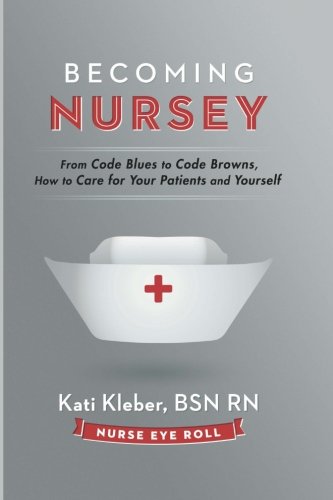


Simply the title of this book alone completely intrigues me. The title sounds like this high intensity drama that would make for a multi-season television show starring insanely attractive actors and actresses.
Based on the synospsis on this book, this novel seems to dive deeper into the world of nursing. The paragraph summary offers a deeper tone to the life of a nurse during a twelve hour shift at a teaching hospital.
I know that it is basically most nursing students dreams to experience the health care world at a teaching hospital, so this novel might give each of us a glimpse into the prestigious world we all day dream about.
We're almost there babes! Those letters will be behind your name before you know it!
One fun fact about me is that when I was younger writing was my absolute passion. I was seven years old writing and illustrating short stories about animals on loose leaf paper and giving them to my aunt to proof read for me. As I got older I discovered other passions and put writing to the side as I got busy with teenage and college life. Discovering these different books is a comforting find because it gives me motivation to explore the idea that one day I could be a nurse author. I think that every nursing student has an intense curiosity to hear about "what it's really like to be a nurse", so I am very happy I was able to find and share these books to those who read my blog!
- Michelle #BSNbabe
I am an Amazon Associate
I have come to familiarize myself with many different nursing-related reading books or nurse authors that allow readers to leave their text book on their desk while still learning about their future profession.
This post is meant to highlight books with great reviews that I have discovered and am interested in placing in my "I'm finally finished with nursing school" library. I know I will be very interested in books that highlight other nurses new-grad journeys and shed light on all aspects of the nursing profession in real life situations.
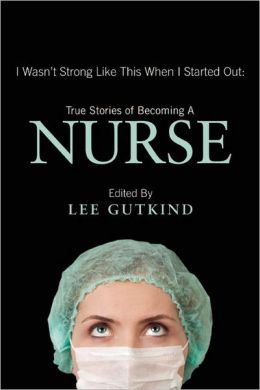
I actually own this book but have yet to sit down and read it all the way through! This book is comprised of different stories from many different nurses about different shifts that stuck out to them. I think that this book can be super inspirational, and it seems to be extremely popular.
Shout out to my mom for buying this for me when I first started nursing school!
After reading the synopsis of this book in the product description I think that this book will be a fantastic read. A large part of me is super nervous to eventually being my RN journey, so finding any resource that will ease that transition is a blessing.
Based off of this description this book is written by a blogger, which makes it even more interesting to me. As an up and coming blogger who is hopefully producing interesting content it is amazing to see where someone's blogging journey can take them.
A nurse never has to be "just a nurse". You can take your experiences and do anything you want with them. With the right motivation and determination you might just be selling a book about your experiences!
Based off of this description this book is written by a blogger, which makes it even more interesting to me. As an up and coming blogger who is hopefully producing interesting content it is amazing to see where someone's blogging journey can take them.
A nurse never has to be "just a nurse". You can take your experiences and do anything you want with them. With the right motivation and determination you might just be selling a book about your experiences!
I personally discovered this book through the nursing community on Instagram. I follow the author and I genuinely cannot wait to get my hands on this read. This book is extremely popular - it keeps selling out on Amazon - so I can't wait to be done with nursing school so I can see what all the hype is about. OH, and learn what I wasn't taught in nursing school.
The Shift: One Nurse, Twelve Hours, Four Patients' Lives Paperback
The Shift: One Nurse, Twelve Hours, Four Patients' Lives Paperback
Simply the title of this book alone completely intrigues me. The title sounds like this high intensity drama that would make for a multi-season television show starring insanely attractive actors and actresses.
Based on the synospsis on this book, this novel seems to dive deeper into the world of nursing. The paragraph summary offers a deeper tone to the life of a nurse during a twelve hour shift at a teaching hospital.
I know that it is basically most nursing students dreams to experience the health care world at a teaching hospital, so this novel might give each of us a glimpse into the prestigious world we all day dream about.
We're almost there babes! Those letters will be behind your name before you know it!
One fun fact about me is that when I was younger writing was my absolute passion. I was seven years old writing and illustrating short stories about animals on loose leaf paper and giving them to my aunt to proof read for me. As I got older I discovered other passions and put writing to the side as I got busy with teenage and college life. Discovering these different books is a comforting find because it gives me motivation to explore the idea that one day I could be a nurse author. I think that every nursing student has an intense curiosity to hear about "what it's really like to be a nurse", so I am very happy I was able to find and share these books to those who read my blog!
- Michelle #BSNbabe
I am an Amazon Associate
Friday, August 25, 2017
Back to School: Nursing Skill Nerves
Hello All!
In this blog post I am here to discuss the very exciting but very nerve wracking experience of learning, demonstrating, and performing your nursing skills!
(As you are reading this I am actually performing a skills check off as we speak!)
Now, each semester of nursing school you go through you will probably learn a new set of skills that pertain to your clinical course topic (At least that is how it works in my nursing program.)
During my first semester I learned different skills such as how to give a bed bath, how to make a proper hospital bed, how to put in an in-dwelling catheter and a NG tube. During my second semester, my Med-Surge rotation, I learned how to put in an IV. For my OB/Peds rotation the skills we learned were nasal and oral suctioning in preparation for the upcoming critical care semester the following semester.
In my program the schedule is: we learn the designated set of skills during the first week of the semester, have a week or two to practice the skills and then perform them using mannequins in front of an instructor for grading. The grading process consists of the instructor going down the list of written out steps and checking whether or not you completed them - if a certain number of steps are skipped then you must schedule to do a re-do return demo for a different date. You cannot begin clinical until you pass your skills demonstrations.
That whole process can become very nerve wracking. I, for one, have always had a tinge of nervousness for every skill demo I have had to perform, no matter who was watching me demonstrate.
Now, I'm here to tell you that it's perfectly normal and expected to be nervous. Your professors are not going to judge you for having your hands shake as your trying to shove an expired "for practice use only" catheter tip into rubber mannequin genitalia.
I'm also here to tell you that the hospital staff at your clinical site won't judge you for being nervous either. They have all been in your spot before, and if they try really hard they can probably remember their first skill set and how nervous they were at the time.
Having gone through performing a few skills on patients I can tell you with confidence that it gets better. I remember my very first independent and completely successful IV stick -- which I also completely charted in the hospital computer system all by myself. Now, it sounds completely dorky, but that was a very proud moment in my student nurse career, and hopefully one that I will never forget.
I know that learning new skills can be extremely intimidating - you might even think to yourself "What? I'm allowed/need to learn how/am going to do that?"
Yes. Yes, indeed.
So, coming from a girl that has certainly "been there and done that":
Try and relax before your skills demonstration at school. It's really just practice, and your nursing instructors aren't out to get you! They just want to make sure that you learn the skills properly so you can go out and do them correctly when you are a real RN!
To learn the steps, rewrite them and practice! I would spend hours in the practice lab with my study group going over skill steps and when I went home I would rewrite each step until I was able to recite them back to myself by memory. Color-code them PRN! Practice is so important.
Talk to your lead instructor about your nerves. Aside from teaching you and scaring you to your core about exams, they have some good advice up their sleeves they're just waiting to hand out to those that seek it.
As the semester starts to roll out at full speed, you will be faced with lots of skills to learn and lots of facts to memorize. Take everything day by day, and try not to get overwhelmed. It's all about the journey - especially with nursing. Always remember that you're trying to be the most competent nurse you can be, and that means learning your skills properly!
Thank you so much for reading! I really appreciate all of your support!
- Michelle
#BSNbabe
In this blog post I am here to discuss the very exciting but very nerve wracking experience of learning, demonstrating, and performing your nursing skills!
(As you are reading this I am actually performing a skills check off as we speak!)
Now, each semester of nursing school you go through you will probably learn a new set of skills that pertain to your clinical course topic (At least that is how it works in my nursing program.)
During my first semester I learned different skills such as how to give a bed bath, how to make a proper hospital bed, how to put in an in-dwelling catheter and a NG tube. During my second semester, my Med-Surge rotation, I learned how to put in an IV. For my OB/Peds rotation the skills we learned were nasal and oral suctioning in preparation for the upcoming critical care semester the following semester.
In my program the schedule is: we learn the designated set of skills during the first week of the semester, have a week or two to practice the skills and then perform them using mannequins in front of an instructor for grading. The grading process consists of the instructor going down the list of written out steps and checking whether or not you completed them - if a certain number of steps are skipped then you must schedule to do a re-do return demo for a different date. You cannot begin clinical until you pass your skills demonstrations.
That whole process can become very nerve wracking. I, for one, have always had a tinge of nervousness for every skill demo I have had to perform, no matter who was watching me demonstrate.
Now, I'm here to tell you that it's perfectly normal and expected to be nervous. Your professors are not going to judge you for having your hands shake as your trying to shove an expired "for practice use only" catheter tip into rubber mannequin genitalia.
I'm also here to tell you that the hospital staff at your clinical site won't judge you for being nervous either. They have all been in your spot before, and if they try really hard they can probably remember their first skill set and how nervous they were at the time.
Having gone through performing a few skills on patients I can tell you with confidence that it gets better. I remember my very first independent and completely successful IV stick -- which I also completely charted in the hospital computer system all by myself. Now, it sounds completely dorky, but that was a very proud moment in my student nurse career, and hopefully one that I will never forget.
I know that learning new skills can be extremely intimidating - you might even think to yourself "What? I'm allowed/need to learn how/am going to do that?"
Yes. Yes, indeed.
So, coming from a girl that has certainly "been there and done that":
Try and relax before your skills demonstration at school. It's really just practice, and your nursing instructors aren't out to get you! They just want to make sure that you learn the skills properly so you can go out and do them correctly when you are a real RN!
To learn the steps, rewrite them and practice! I would spend hours in the practice lab with my study group going over skill steps and when I went home I would rewrite each step until I was able to recite them back to myself by memory. Color-code them PRN! Practice is so important.
Talk to your lead instructor about your nerves. Aside from teaching you and scaring you to your core about exams, they have some good advice up their sleeves they're just waiting to hand out to those that seek it.
As the semester starts to roll out at full speed, you will be faced with lots of skills to learn and lots of facts to memorize. Take everything day by day, and try not to get overwhelmed. It's all about the journey - especially with nursing. Always remember that you're trying to be the most competent nurse you can be, and that means learning your skills properly!
Thank you so much for reading! I really appreciate all of your support!
- Michelle
#BSNbabe
Wednesday, August 9, 2017
My Nursing School Supply Recommendations
I was certainly that girl in Health Assessment who tried to save money by buying inexpensive items. That didn't work out well. Sometimes when it comes to nursing items that you're going to be using for years in the hospital setting, it is best to save and splurge than spend and suffer.
I bought two inexpensive stethoscopes before I finally bought my Littmann. You could barely hear anything out of my first inexpensive stethoscope, while my second one literally had a tubing rip the second day that I used it.
When it comes to stethoscopes, spending approximately $80 once is much better than spending $80 on inexpensive items that keep breaking.
I recommend a Littmann Stethoscope.
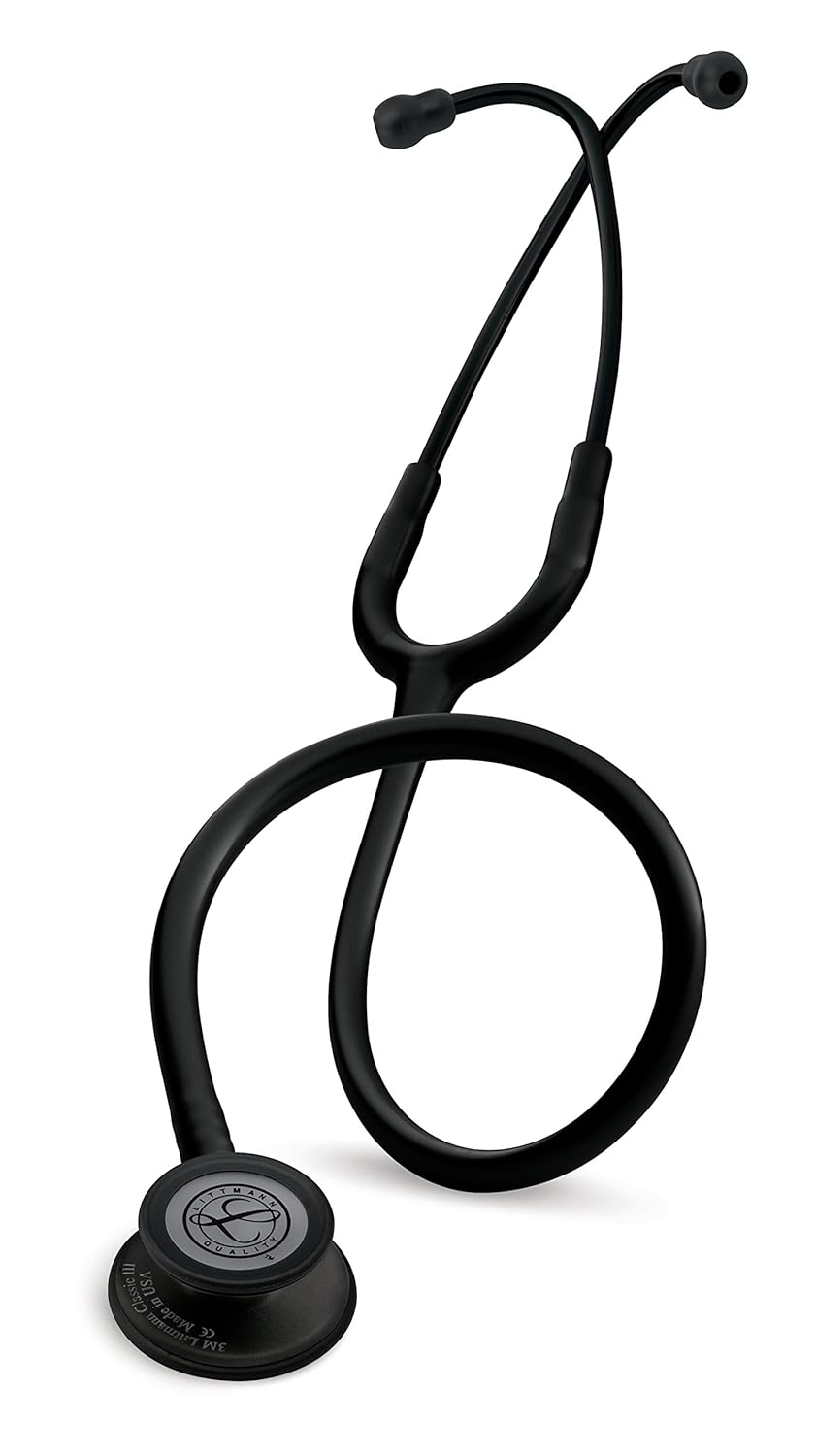

I definitely recommend getting a stethoscope with a separate bell and diaphragm that you can flip to instead of having one piece that you twist.
Thankfully, the other items I needed for health assessment were inexpensive and not difficult to find.
The other nursing essential item that you'll need to purchase is a penlight.

I think that the two-pack of penlights are a great deal! I have had mine for multiple semesters and I have not had an issue with it working. There a few inexpensive brands that do not work well at all.
I also recommend only keeping the batteries in your penlight during the semester so you don't run into any battery problems when your not using them!
The worst thing that could happen is you find out your pen light has been clicked on for days and now you are in need of a battery at 5am in the hospital lobby.
Scissors are also super easy to find and an item that can be very personalized.

These scissors aren't necessarily the prettiest out there, but they definitely get the job done. I have a pair of these exact scissors and they hold up against some pretty intense wound dressings.
A blood pressure cuff is the last thing that you'll need for your nursing school journey

For me, properly getting a manual blood pressure reading was a little more difficult. I remember the days in lab when I would practice on my partner and get so frustrated when I couldn't hear the first beat right away. However, I think that keeping up the skill of accurately getting a manual blood pressure cuff is a skill that should be kept up with. Yes, there are automatic cuffs, but you never know what will happen during your shift. I once saw a patient that had such low blood pressure that the automatic cuff would not read it properly, prompting the nurse to do it the "Old fashioned way". Getting an accurate reading is so important when you are dealing with patients and vital sign changes, so getting a good manual cuff is equally as important as knowing how to use one!
I hope that this post was informative in helping you pick out the best nursing school tools for your journey! Click on the highlighted links to be directed to the Amazon page that they are sold on. I was that girl using her step-dad's prime membership when I needed to get my stethoscope before class the next week.
- Michelle
#BSNbabe
I am an amazon associate
I bought two inexpensive stethoscopes before I finally bought my Littmann. You could barely hear anything out of my first inexpensive stethoscope, while my second one literally had a tubing rip the second day that I used it.
When it comes to stethoscopes, spending approximately $80 once is much better than spending $80 on inexpensive items that keep breaking.
I recommend a Littmann Stethoscope.
I definitely recommend getting a stethoscope with a separate bell and diaphragm that you can flip to instead of having one piece that you twist.
Thankfully, the other items I needed for health assessment were inexpensive and not difficult to find.
The other nursing essential item that you'll need to purchase is a penlight.
I think that the two-pack of penlights are a great deal! I have had mine for multiple semesters and I have not had an issue with it working. There a few inexpensive brands that do not work well at all.
I also recommend only keeping the batteries in your penlight during the semester so you don't run into any battery problems when your not using them!
The worst thing that could happen is you find out your pen light has been clicked on for days and now you are in need of a battery at 5am in the hospital lobby.
Scissors are also super easy to find and an item that can be very personalized.
These scissors aren't necessarily the prettiest out there, but they definitely get the job done. I have a pair of these exact scissors and they hold up against some pretty intense wound dressings.
A blood pressure cuff is the last thing that you'll need for your nursing school journey
For me, properly getting a manual blood pressure reading was a little more difficult. I remember the days in lab when I would practice on my partner and get so frustrated when I couldn't hear the first beat right away. However, I think that keeping up the skill of accurately getting a manual blood pressure cuff is a skill that should be kept up with. Yes, there are automatic cuffs, but you never know what will happen during your shift. I once saw a patient that had such low blood pressure that the automatic cuff would not read it properly, prompting the nurse to do it the "Old fashioned way". Getting an accurate reading is so important when you are dealing with patients and vital sign changes, so getting a good manual cuff is equally as important as knowing how to use one!
I hope that this post was informative in helping you pick out the best nursing school tools for your journey! Click on the highlighted links to be directed to the Amazon page that they are sold on. I was that girl using her step-dad's prime membership when I needed to get my stethoscope before class the next week.
- Michelle
#BSNbabe
I am an amazon associate
Wednesday, July 26, 2017
What I Learned In Nursing School Is......."My Third Semester"
After a wonderful summer break I began my third nursing school semester in the Fall of 2016.
This semester was my "OB/Peds" split, with half of the semester adding on "Community Nursing" and the other half adding on "Nursing Ethics" and my upper level nursing elective "Client Education".
Client Education was a super simple online class that only had discussion posts and one Powerpoint presentation at the end of the semester. I actually learned a lot about the different ways that education is important with all of our patients and the different ways the information can be relayed. The project was to create a PowerPoint where you were teaching your patient (any of patient and topic of your choosing).
My Nursing Ethics class was somewhat in-depth because there were a lot of legal and ethical definitions, and a lot of scenario questions that really made you think about how you would handle those situations.
My Community nursing class was another full blown clinical class, only accelerated. Every had different clinical sites to go to that classified as Community Health sites. For example, some students went to a home health agency to shadow with a home health nurse for the day. One of my experiences was at a local women's clinic. We also had one simulation lab day regarding Community Health where was completed two different scenarios, and two exams were tacked on throughout the time frame of the class regarding the readings we were responsible for.
My OB/peds portion of the semester was the most difficult component to the semester. The teacher we had for the OB portion of the course was an OB nurse by trade who recently began teaching the subject. Throughout the whole entire semester I could not figure out the correct way to learn about Mom and Baby in order to answer the exam questions correctly. My clinical portion to Mom and Baby went just as poorly, and having my professor as my clinical instructor did not make things much better. However, I powered through the weeks of the OB course and stumbled my way to Peds, where I fell completely in love.
For my Pediatric course, the professor was a mainstay faculty member in my nursing program who is actually a Pediatric Nurse Practitioner that also worked at a practice in a neighboring town. This professor was very knowledgeable, and delivered the information in a way in which it was easy to comprehend and apply to the clinical setting.
My pediatric clinical has to be my second favorite rotation, only behind my Med-Surge rotation my second semester. I got the absolute privilege to go to a children's hospital for my pediatric rotation instead of a normal pediatric floor in a general hospital. The commute to this location was the only downfall because no one is a fan of rush hour traffic. However, the experience that I got in this facility is one that I will always remember.
I had always toyed with the idea of being either a NICU nurse with premies or a pediatric nurse. Once I actually had to assess a baby I knew that that specialty was really out of the question. I have always had positive relationships with children - ever since I was a child myself I would always look over those smaller than me at family parties and different social scenarios. Having my pediatric clinical be such a success completely solidified this specialty as being something I would definitely consider practicing for the rest of my nursing career.
Fun Fact about my pediatric rotation: On the second to last clinical day I suddenly got so sick in the morning I almost passed out. I literally fell asleep at pre-conference at six the morning (completely unlike me), and as we were walking onto the specific unit we were on for the day I felt like I was going to throw up and pass out. I pulled my professor to the side and told her I wasn't feeling well and she gave me crackers and juice. I ended up sitting in a secluded, old nurses station that no one really used anymore for most of the morning, trying not to feel sick anymore. It was really embarrassing, and I felt bad for the nurse I was paired up with because I wasn't too helpful that day.
That day showed me that self-care is super important, and that sleep and a well-balanced diet are two key factors in staying healthy. Taking care of yourself first is the only way you will be able to do your job properly and help others. Obviously, if I was really a nurse I would really have to push past my light-headedness and nausea and do the best service I could for my patients.
This semester is also the semester I started an on campus job for my nursing college. It was a simple job with moderate hours; it served a positive purpose of allowing me to again get closer with my fellow nursing classmates and faculty, as well as bring in some extra cash.
I continued to be a part of SNA my third semester, this time as secretary. I really enjoyed this position, as I was able to be more "hands on" within the board of directors of SNA. My main duties were to take meeting minutes for each BOD meeting, organize the end of the semester board position elections, and help other members with their events in any way I could.
Overall, this semester was really difficult, but I learned a lot of important life and educational lessons.
I hope that you enjoyed reading this post! Thank you so much for reading, it is greatly appreciated!
- Michelle
#BSNbabe
This semester was my "OB/Peds" split, with half of the semester adding on "Community Nursing" and the other half adding on "Nursing Ethics" and my upper level nursing elective "Client Education".
Client Education was a super simple online class that only had discussion posts and one Powerpoint presentation at the end of the semester. I actually learned a lot about the different ways that education is important with all of our patients and the different ways the information can be relayed. The project was to create a PowerPoint where you were teaching your patient (any of patient and topic of your choosing).
My Nursing Ethics class was somewhat in-depth because there were a lot of legal and ethical definitions, and a lot of scenario questions that really made you think about how you would handle those situations.
My Community nursing class was another full blown clinical class, only accelerated. Every had different clinical sites to go to that classified as Community Health sites. For example, some students went to a home health agency to shadow with a home health nurse for the day. One of my experiences was at a local women's clinic. We also had one simulation lab day regarding Community Health where was completed two different scenarios, and two exams were tacked on throughout the time frame of the class regarding the readings we were responsible for.
My OB/peds portion of the semester was the most difficult component to the semester. The teacher we had for the OB portion of the course was an OB nurse by trade who recently began teaching the subject. Throughout the whole entire semester I could not figure out the correct way to learn about Mom and Baby in order to answer the exam questions correctly. My clinical portion to Mom and Baby went just as poorly, and having my professor as my clinical instructor did not make things much better. However, I powered through the weeks of the OB course and stumbled my way to Peds, where I fell completely in love.
For my Pediatric course, the professor was a mainstay faculty member in my nursing program who is actually a Pediatric Nurse Practitioner that also worked at a practice in a neighboring town. This professor was very knowledgeable, and delivered the information in a way in which it was easy to comprehend and apply to the clinical setting.
My pediatric clinical has to be my second favorite rotation, only behind my Med-Surge rotation my second semester. I got the absolute privilege to go to a children's hospital for my pediatric rotation instead of a normal pediatric floor in a general hospital. The commute to this location was the only downfall because no one is a fan of rush hour traffic. However, the experience that I got in this facility is one that I will always remember.
I had always toyed with the idea of being either a NICU nurse with premies or a pediatric nurse. Once I actually had to assess a baby I knew that that specialty was really out of the question. I have always had positive relationships with children - ever since I was a child myself I would always look over those smaller than me at family parties and different social scenarios. Having my pediatric clinical be such a success completely solidified this specialty as being something I would definitely consider practicing for the rest of my nursing career.
Fun Fact about my pediatric rotation: On the second to last clinical day I suddenly got so sick in the morning I almost passed out. I literally fell asleep at pre-conference at six the morning (completely unlike me), and as we were walking onto the specific unit we were on for the day I felt like I was going to throw up and pass out. I pulled my professor to the side and told her I wasn't feeling well and she gave me crackers and juice. I ended up sitting in a secluded, old nurses station that no one really used anymore for most of the morning, trying not to feel sick anymore. It was really embarrassing, and I felt bad for the nurse I was paired up with because I wasn't too helpful that day.
That day showed me that self-care is super important, and that sleep and a well-balanced diet are two key factors in staying healthy. Taking care of yourself first is the only way you will be able to do your job properly and help others. Obviously, if I was really a nurse I would really have to push past my light-headedness and nausea and do the best service I could for my patients.
This semester is also the semester I started an on campus job for my nursing college. It was a simple job with moderate hours; it served a positive purpose of allowing me to again get closer with my fellow nursing classmates and faculty, as well as bring in some extra cash.
I continued to be a part of SNA my third semester, this time as secretary. I really enjoyed this position, as I was able to be more "hands on" within the board of directors of SNA. My main duties were to take meeting minutes for each BOD meeting, organize the end of the semester board position elections, and help other members with their events in any way I could.
Overall, this semester was really difficult, but I learned a lot of important life and educational lessons.
I hope that you enjoyed reading this post! Thank you so much for reading, it is greatly appreciated!
- Michelle
#BSNbabe
Subscribe to:
Posts (Atom)